
Being named executor is an honour, and also a lot of work. Most executor checklists cover the paperwork: the will, probate, taxes, and bank accounts. Very few explain what to actually do with the house and everything inside it. Yet for most families, clearing the home is the most physical, emotional and time-consuming part of settling an estate.
This executor checklist for BC focuses on exactly that: securing, sorting, clearing, and handing over a home or strata unit, with the legal guardrails flagged along the way. For the bigger picture of the whole process, start with our estate clean out guide for Surrey and Metro Vancouver families, then use this checklist to work through the house step by step.
A quick note: this is practical guidance from a junk removal crew that clears estate homes every week, not legal advice. Where a step depends on the will, the estate’s value or family agreement, we’ve flagged it so you can confirm it with the estate’s lawyer or notary.
Before You Start: Executor or Administrator?
In BC, estates are governed by the Wills, Estates and Succession Act (WESA).
- An executor is named in the will. Their authority comes from the will itself, so they can start protecting the estate right away. To deal with banks, land title or a buyer, they usually need a grant of probate from the BC Supreme Court.
- An administrator is appointed by the court when there’s no will. They have no authority until the court issues a grant, so they shouldn’t start clearing or disposing of property before then.
A few numbers worth knowing:
- Before applying for probate, the executor must send notice (Form P1) to beneficiaries and certain family members at least 21 days before filing.
- Estates under about $25,000 usually don’t need probate.
- Probate fees are charged on the estate’s BC assets: none on the first $25,000, $6 per $1,000 between $25,000 and $50,000, and $14 per $1,000 above $50,000, plus a court filing fee.
- Probate commonly takes several months in BC.
Not sure yet whether you’ll act as executor? Talk to a lawyer before you start clearing the home. Taking control of estate property can make it harder to step aside later.
Phase 1: The First Week
- Get several copies of the death certificate. You’ll need them for insurers, banks and utilities.
- Find the will and any notes about personal belongings or specific gifts.
- Secure the home. Lock doors and windows, collect spare keys, and consider changing the locks if many people had access.
- Call the home insurer. Explain that the owner has died and the home is empty. Many policies limit coverage once a home has been vacant for around 30 days unless you make arrangements, and some require regular inspections, especially in winter. Ask exactly what their policy requires.
- Remove valuables and important papers. Cash, jewellery, firearms (follow RCMP guidance for executors), bank statements, tax returns, title documents, passports and photo albums.
- Redirect the mail so bills and statements reach you.
- Keep utilities and heat on to protect the house.
- Throw out perishable food and empty the fridge before it becomes a bigger problem.
- Let a neighbour know the home is empty and who to call.
Phase 2: Before Probate (Inventory and Sorting)
This is where most of the work happens, and where executors need to be careful.
- Take photos or video of every room before anything moves. It creates a record for the estate and helps settle questions later.
- Make an inventory of anything with real value: furniture, art, collectibles, jewellery, tools, vehicles. Get valuations for significant items.
- Ask beneficiaries for wish lists. Let each person say which items matter to them before anything is divided.
- Set aside keepsakes and items named in the will. Don’t distribute them until you’ve confirmed with the lawyer that it’s appropriate.
- Search the house thoroughly. Check drawers, pockets, books, freezers and safes for cash, papers and jewellery.
What can an executor give away before probate? According to the People’s Law School, the law isn’t usually concerned about ordinary used furniture or clothing, but items with real value, specific gifts in the will, vehicles, and anything beneficiaries disagree about are different. Beneficiaries must be treated fairly. Before giving away or selling anything of value, check with the estate’s lawyer.
Deciding what happens to each item, from photos and medications to furniture and clothing, is covered room by room in our guide on what to do with a deceased parent’s belongings.
Phase 3: If the Home Is a Strata Unit
Condos and townhouses add a few extra steps:
- Notify the strata council or property manager that the owner has died and give your contact details as executor. There’s no strict legal requirement, but it avoids confusion and keeps you informed.
- Keep paying strata fees. They continue until the unit is sold or transferred.
- Read the move bylaws. Many buildings limit moves to certain days and hours.
- Book the elevator and loading area for clean-out day. One to two weeks of notice is common, and some buildings charge a move fee or deposit.
- Ask your junk removal company for a certificate of insurance if the building requires one.
- Order a Form B (Information Certificate) from the strata when you’re preparing to sell. It shows fees, levies and bylaws for buyers.
Phase 4: Clearing the Home
Once keepsakes, valuables and wish-list items are dealt with:
- Donate usable items. In Surrey, the City lists charities that pick up furniture, including the Salvation Army, WorldServe and the White Rock South Surrey Hospice store. Big Brothers picks up clothing.
- Recycle electronics at a Return-It depot (free).
- Use the City of Surrey Large Item Pickup for up to 6 large items per year if the home is on City collection.
- Take hazardous items (paint, chemicals, propane tanks, batteries) to a Metro Vancouver recycling and waste centre. Junk removal companies can’t take them.
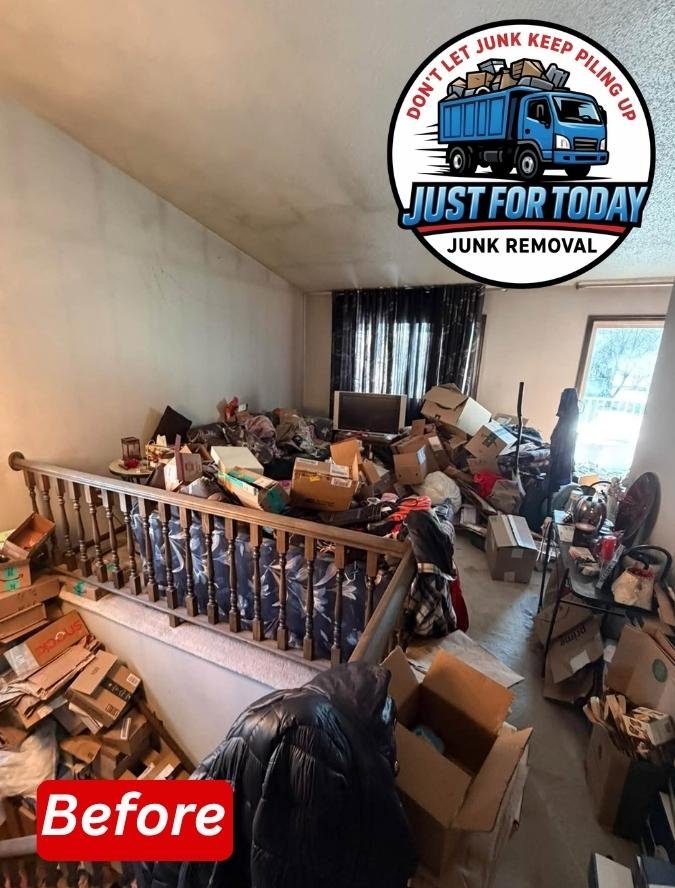
- Book a junk removal crew for everything else. Ask for a firm price before loading, confirm they donate and recycle first, and ask for receipts.
- Schedule cleaning after the home is empty.
If the family is out of town, arrange access through a neighbour, the realtor or a lockbox, and ask the crew to send photos once the job is done.
Phase 5: Selling or Handing Over the Home
- Talk to a realtor early. In BC, a home can often be listed before probate is granted, but the sale can’t complete until the executor has the grant. Confirm the details with the estate’s lawyer.
- Keep the home insured and checked until the sale completes.
- Have the home cleared and cleaned before listing photos. An empty, swept home photographs better and gives buyers a clean slate.
- Hand over keys and garage remotes to the realtor or buyer as arranged.
Phase 6: Records and Receipts
Executors have to account for the estate, so keep a paper trail:
- Keep every receipt: locksmith, insurance, utilities, cleaning, junk removal, storage and repairs. These are usually estate expenses.
- Keep donation receipts and a list of what was donated.
- Keep a log of who received which items and when.
- Keep before-and-after photos of the home.
Beneficiaries can ask to see the estate accounts, and good records make that conversation simple.
Phase 7: Taxes and Distribution (High Level)
- File the final (terminal) tax return. For deaths between January 1 and October 31, it’s generally due April 30 of the following year. For deaths in November or December, it’s due six months after the date of death.
- Ask the CRA for a clearance certificate before distributing the estate. If you distribute without one and taxes are owed, the executor can be personally liable.
- Wait before distributing. WESA generally prevents distribution for 210 days after the grant unless all beneficiaries agree or the court orders otherwise. Many estates take about a year to settle.
Taxes and distribution are where an accountant and lawyer earn their fees. Use this list as a reminder of what to ask about, not as a substitute for advice.
Executor Checklist FAQs
Can an executor clean out a house before probate in BC?
An executor named in the will can usually secure the home and sort low-value household items before probate, as long as beneficiaries are treated fairly and records are kept. Valuable items, specific gifts, vehicles, and anything disputed should wait. Check with the estate’s lawyer before giving away or selling anything of value.
How long does an executor have to clear a house in BC?
There’s no fixed deadline, but costs continue while the home sits empty: insurance, utilities, taxes and strata fees. Many executors aim to clear the home within a few months so it can be listed once probate is granted. The “executor’s year” is a common rule of thumb for settling the whole estate.
Who pays for clearing out the house?
Clearing, cleaning, and junk removal are normally paid by the estate as administration expenses. Keep every receipt and ask the estate’s accountant or lawyer if you’re unsure how to record them.
Does home insurance cover a vacant house after the owner dies?
Often only for a limited time. Many policies limit or cancel coverage after a home has been vacant for about 30 days unless the insurer is told and arrangements are made. Call the insurer as soon as possible and ask what their policy requires.
What should an executor keep from the house?
Keep the will, financial and tax records, title documents, insurance papers, photos and items specifically mentioned in the will. Hold anything of significant value until it’s been appraised and the beneficiaries agree on how to handle it.
Can family members take items before the estate is settled?
Only with the executor’s agreement and in a fair, documented way. Taking items without agreement can cause disputes. Wish lists and a written log of who received what help keep things fair.
The Bottom Line
The paperwork side of being an executor gets most of the attention, but the house is where the real work happens. Secure it in the first week, inventory and photograph before anything moves, sort fairly and with records, follow strata rules, and let the lawyer guide anything of value. Once the family has taken what matters, the final clear-out is usually the quickest part of the whole job.